
Buying Guides
Tile and Stone Materials Explained: Porcelain, Ceramic, Marble and Sintered Stone
June 22, 2026 · Ace Premium Tile & Stone
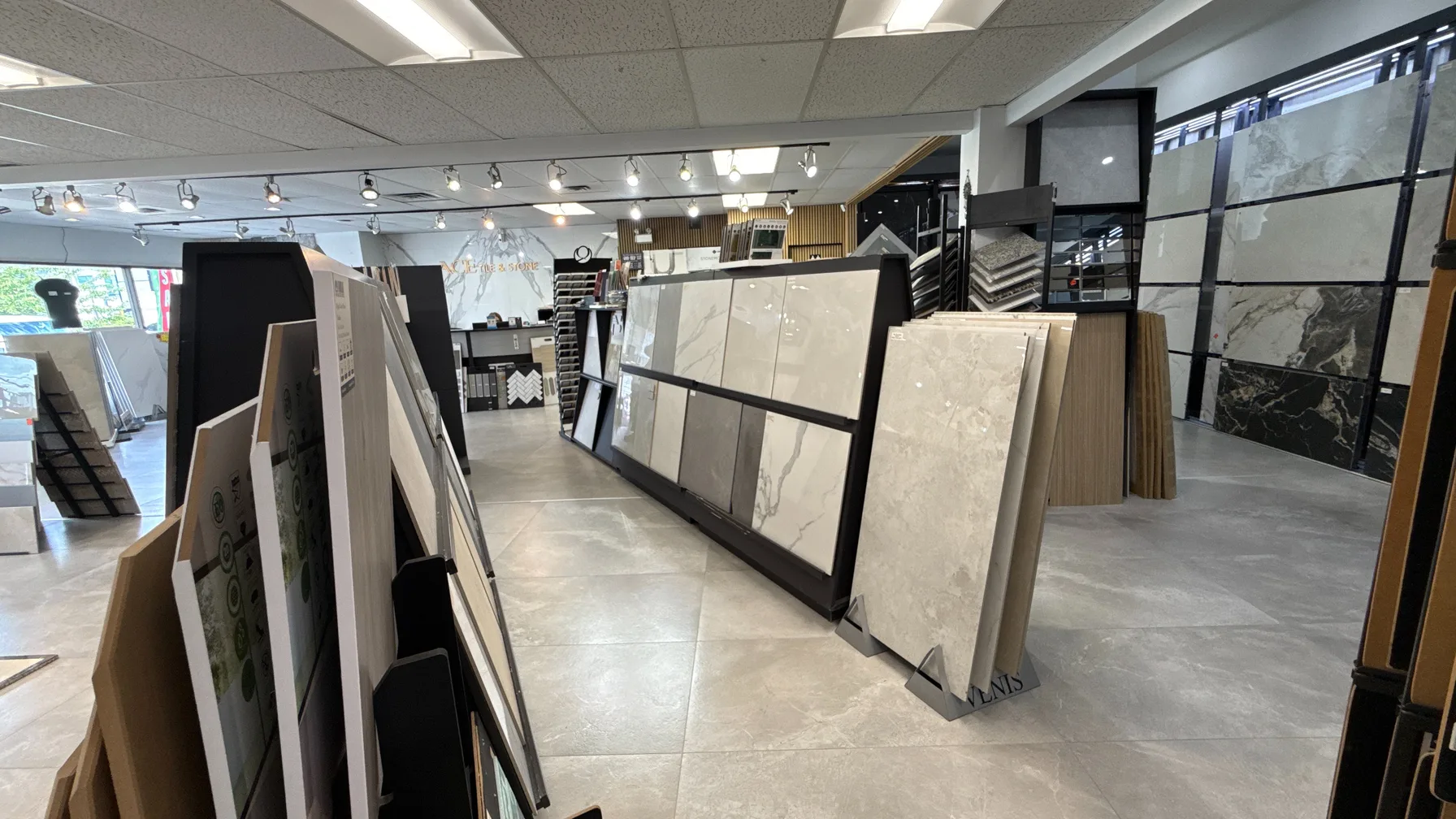
Most tile decisions go sideways for the same reason: the material was chosen for how it looks and nobody asked how it behaves. A surface that photographs beautifully can be the wrong call on a wet bathroom floor, a busy kitchen, or a covered patio that sees a Lower Mainland winter. The material is what decides whether a floor stays sound for decades or starts giving you trouble in a few seasons. This guide walks through the main tile and stone materials we stock at our Richmond showroom, what sets each one apart, and where each belongs in a Greater Vancouver home. Think of it as the map. When you want to go deeper on any one material, the linked guides pick up where this leaves off.
The materials at a glance
Before the detail, here is the short version of what you are choosing between:
- Porcelain: a dense, fired clay that absorbs very little water. It does not need sealing, and it resists frost and scratches, which makes it a workhorse for floors and wet areas.
- Ceramic: made from similar clay but fired less densely, so it is lighter and easier to cut. That suits walls and backsplashes.
- Natural stone and marble: quarried material with real depth and character. It needs sealing and can etch from acidic cleaners, so it asks for a little more care.
- Sintered stone: a newer engineered surface built for countertops, resistant to heat, UV, and scratches, and made without the resin that quartz relies on.
Each of these earns its place somewhere. The trick is matching the material to what the surface actually has to endure, and the sections below do exactly that.
Porcelain versus ceramic: the split most projects hinge on
Porcelain and ceramic look almost identical in a showroom, yet they behave differently once installed. Both start as fired clay, but porcelain is made from a finer, denser body and fired hotter, so it absorbs very little water. Ceramic is fired less densely and takes on more moisture, which makes it lighter and simpler to handle overhead. That single difference in water absorption drives where each one belongs. Porcelain becomes the sensible default for floors, entryways, and wet rooms, while ceramic shines on walls and backsplashes where it never has to carry foot traffic.
This is the choice more renovations turn on than any other, so it is worth getting right. Our full guide to porcelain versus ceramic tile and how to choose walks through water absorption, durability, and room-by-room fit in detail. For the basics of how each material is made and where it performs, the porcelain tiles and ceramic tiles learning pages are a good companion.
Why porcelain suits the Lower Mainland climate
It is worth pausing on climate, because it changes the math here in a way it might not elsewhere. Greater Vancouver does not get one long deep freeze. Instead we get repeated freeze and thaw cycles through the winter, often several in a single week. Water that soaks into a more absorbent tile can freeze, expand, and crack it over time, and that cycle repeats all season. A dense porcelain body barely takes on water, so there is nowhere for that expansion to do damage.
That is why porcelain is the material we point to for covered patios, thresholds, entryways, and any surface that meets the outdoors around Richmond and the wider Lower Mainland. It stays put through the wet months without the seasonal worry that a more porous material would bring. It also resists scratches, which matters in a busy hallway or a kitchen that never really slows down.
Large format tile: fewer grout lines, more presence
Once you have settled on a material, format is the next lever, and large format tile has changed what a lot of rooms can look like. Oversized porcelain slabs reduce the number of grout lines dramatically, which makes a small bathroom read as calmer and a large floor read as more continuous. The same slabs can run up a feature wall or wrap a shower for a near-seamless look. The trade is that big pieces need a flat substrate and careful handling, so the installation matters as much as the tile.
If you are drawn to that clean, expansive look, our full guide to where large format tile works best covers the rooms and details where oversized slabs pay off. You can also browse the range on our large format tiles collection to see the scale and finishes in person.
Natural stone and marble: character with a care routine
Natural stone brings something engineered surfaces still work hard to imitate: real depth, veining that runs through the body, and a surface that ages with genuine character. Marble is the classic example. The trade is upkeep. Natural stone and marble are porous, so they need sealing to guard against stains, and they can etch when acidic liquids like lemon, wine, or many household cleaners sit on the surface. None of that rules stone out. It simply means the material rewards a household that is willing to seal it and wipe up spills promptly.
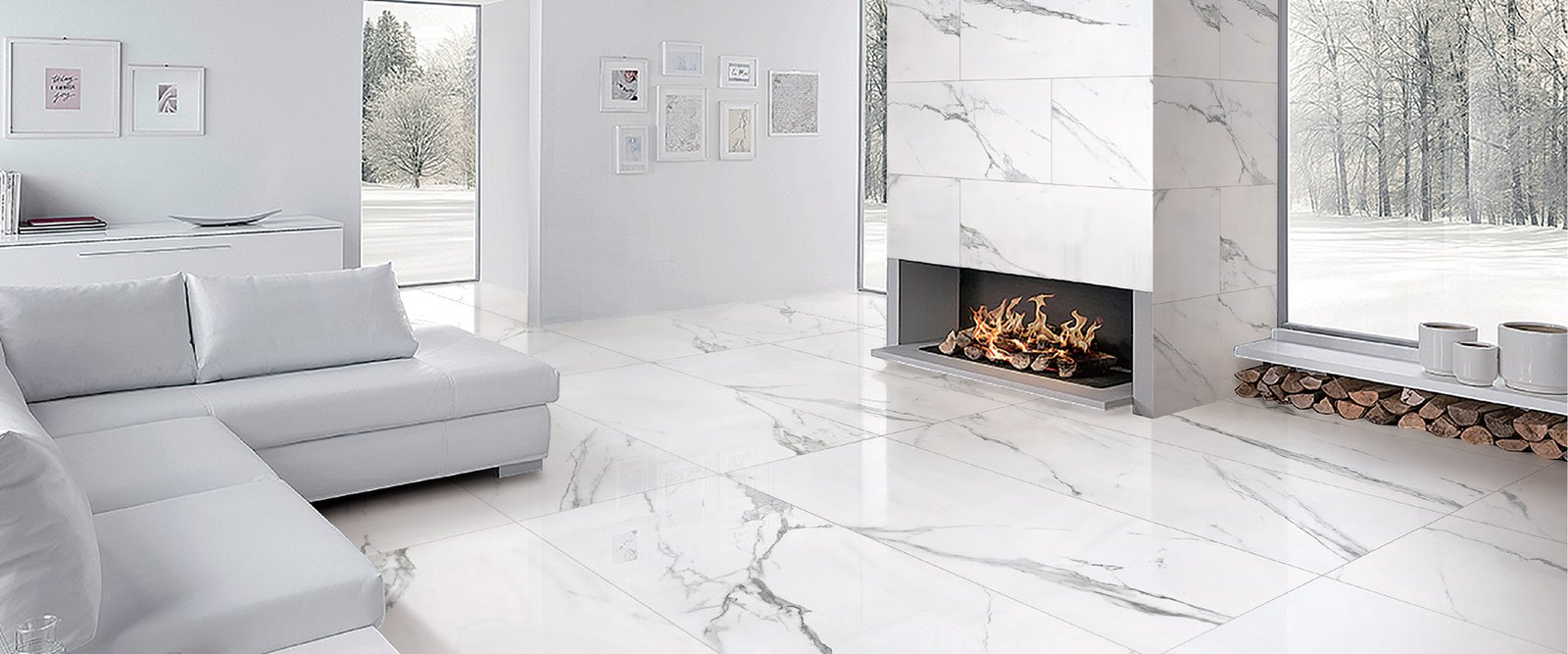
For homeowners who love the marble look but want a lower-maintenance surface, a marble-look porcelain such as Carrara delivers the veined appearance with a water-resistant body that does not need sealing. When it is the genuine article you are after, our marble tiles and slabs page is the place to start, and the broader slabs selection shows the larger pieces suited to countertops and feature walls.
Sintered stone versus quartz and granite for countertops
Countertops are their own decision, because a work surface faces heat, knives, and daily wear that a floor never sees. Sintered stone is an engineered surface made without the resin that quartz depends on, which is what gives it strong resistance to heat, UV light, and scratches. Granite, a natural stone, brings its own hardness and unique patterning but, like other stone, wants periodic sealing. Quartz is popular and consistent in colour, though the resin content is why it can be more sensitive to heat than sintered stone.
Choosing between the three comes down to how the kitchen is used and which trade-offs you are comfortable with. Our full guide to sintered stone versus quartz versus granite lays out the differences so you can weigh them against your own cooking habits and how much upkeep you want to sign up for.
Keeping the surface looking right
The last piece is care, and it is easy to underestimate. Porcelain is one of the lower-maintenance materials, but it still benefits from the right cleaning routine and grout attention to keep it looking the way it did on day one. Getting this right protects the investment and keeps a floor from looking tired before its time. Our full guide to how to clean and care for porcelain tile covers everyday cleaning, what to avoid, and how to keep grout lines fresh across a Greater Vancouver home.
Choosing well for your space
Put it all together and a pattern emerges. Porcelain is the durable, low-absorption choice for floors and wet or cold-exposed areas, and it handles our freeze-thaw winters without fuss. Ceramic is lighter and easier to work with, so it belongs on walls and backsplashes in drier spots. Natural stone and marble bring character in exchange for a sealing and cleaning routine. Sintered stone is built for hardworking countertops. Most homes end up using more than one, and there is nothing wrong with that. A bathroom might run porcelain underfoot, ceramic up the walls, and a stone or sintered surface on the vanity, all reading as one considered design.
Greater Vancouver homes cover a wide range, from character houses in older neighbourhoods to new builds across Richmond and the Lower Mainland, and the same material can look very different depending on a room's light and the finishes around it. Seeing samples together, in person and under real light, is the surest way to avoid a costly reorder.
If you would like help matching the right material to each part of your project, bring your measurements and your ideas to our showroom at #3-11240 Bridgeport Rd in Richmond, or call 604-270-4993. Walk-ins are welcome, and you can also reach us through our contact page. We handle both supply-only and supply-and-install, and we are happy to talk through the options for your space.
In This Guide
Read Next
Porcelain vs Ceramic Tile: How to Choose for Your Project
The real differences between porcelain and ceramic tile, water absorption, durability, and where each belongs, for Greater Vancouver homes and projects.
Large Format Tile: Where Oversized Slabs Work Best
The benefits and trade-offs of large format porcelain tile and slabs, and the rooms and walls where minimal grout lines pay off.
12 Marble-Look Porcelain Tile Collections to See in Richmond BC
A tour of the marble-look porcelain tile collections on display at Ace Premium Tile & Stone in Richmond BC, from Carrara and Calacatta looks to onyx and crema tones.
Sintered Stone vs Quartz vs Granite: Choosing a Countertop Surface
How sintered stone compares to quartz and granite on heat, UV, and scratch resistance, and what that means for kitchens and outdoor counters.
Large Format Tile and Slab Collections Worth Seeing in Person
A guide to the large format porcelain tile and slab collections at Ace Premium Tile & Stone in Richmond BC, including Eternal, Titanium, Grace and Calacatta Slab.
How to Clean and Care for Porcelain Tile
Simple, effective ways to clean porcelain tile and grout, what to avoid, and why porcelain needs so little maintenance.
Featured in this article
Explore These Collections

Planning a Project?
Visit our Richmond showroom to see and touch these materials, or get in touch for samples, pricing, and expert advice.