
Buying Guides
Porcelain vs Ceramic Tile: How to Choose for Your Project
June 26, 2026 · Ace Premium Tile & Stone
Part of our guide: Tile and Stone Materials Explained: Porcelain, Ceramic, Marble and Sintered Stone
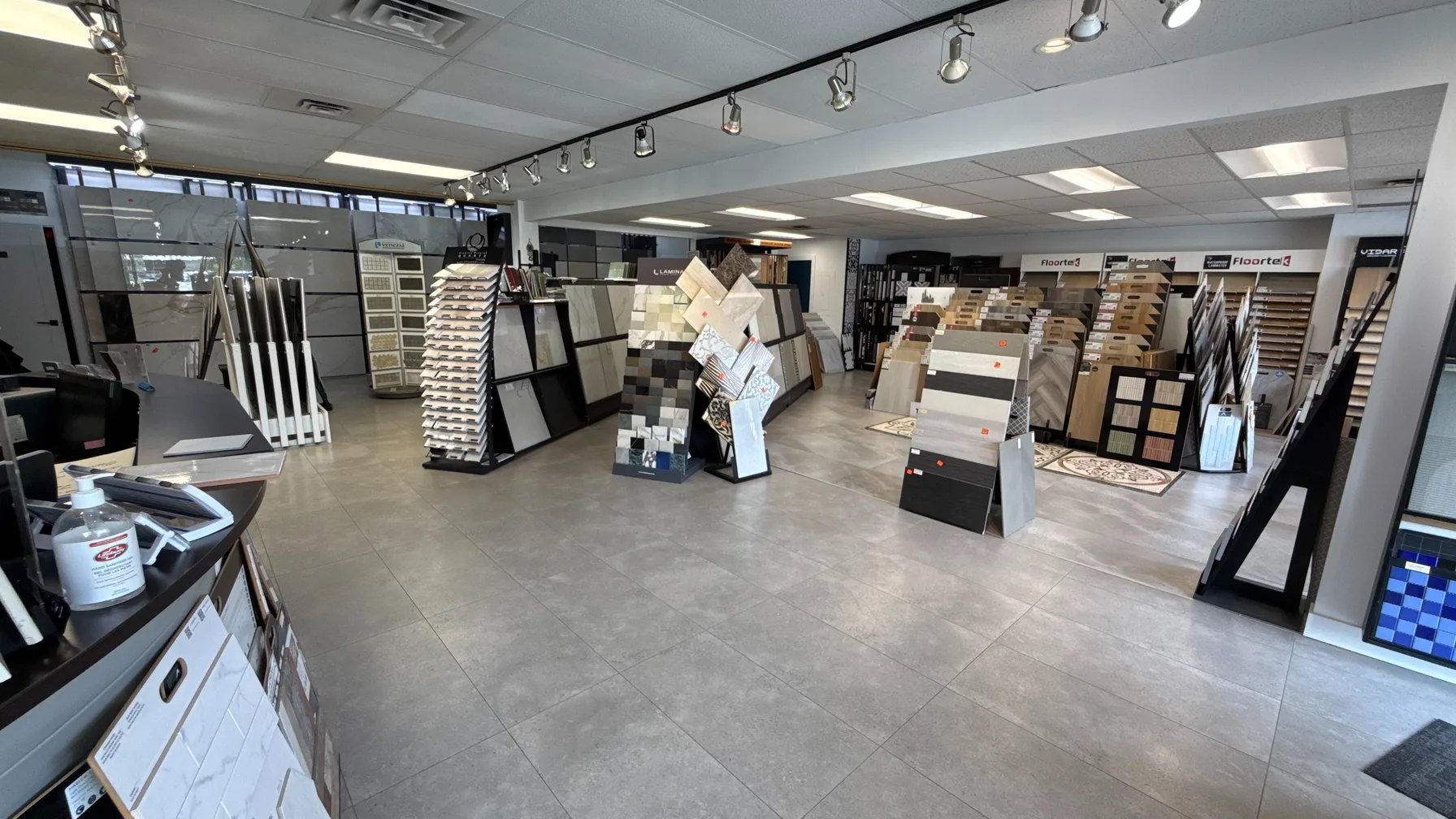
Walk into most showrooms and porcelain and ceramic tile sit side by side, look nearly identical, and cost differently enough that people assume one is simply the budget version of the other. That assumption gets homeowners into trouble. The two are made from similar clays, but they behave differently once they are on your floor or wall, and knowing which is which saves you money and grief on a Lower Mainland renovation. Here is how we explain the difference to customers in our Richmond showroom.
The core difference is water
Both porcelain and ceramic are made from clay that is shaped and fired in a kiln. The distinction comes down to how much water the finished tile absorbs. Porcelain is made from a finer, denser clay and fired at a higher temperature, which produces a body that absorbs very little water. Ceramic is fired less densely and takes on more moisture.
That single property drives almost every other decision. A tile that barely absorbs water resists staining, shrugs off spills, and holds up in wet rooms without soaking anything in. A more absorbent tile is perfectly happy in a dry setting but is a poorer fit where moisture is constant. It is not about one clay being cheap and the other premium. It is about matching the density of the tile to the demands of the space, and once you see it that way the choice usually makes itself.
For a quick overview of how the two are made, our porcelain tiles and ceramic tiles learning pages break it down further.
Where porcelain earns its keep
Because porcelain absorbs so little water, it becomes the sensible default anywhere that sees traffic, moisture, or temperature swings. Floors are the obvious case. Entryways, kitchens, bathrooms, and laundry rooms all take a beating, and porcelain handles it without needing to be sealed the way natural stone does.
Porcelain is also frost resistant and scratch resistant, which matters more here than people expect. In the Lower Mainland we get repeated freeze and thaw cycles through the winter rather than one long deep freeze. Water that works into a more absorbent tile can freeze, expand, and crack it. A dense porcelain body gives that water nowhere to go, which is why porcelain is the material we point to for covered patios, thresholds, and any surface that meets the outdoors.
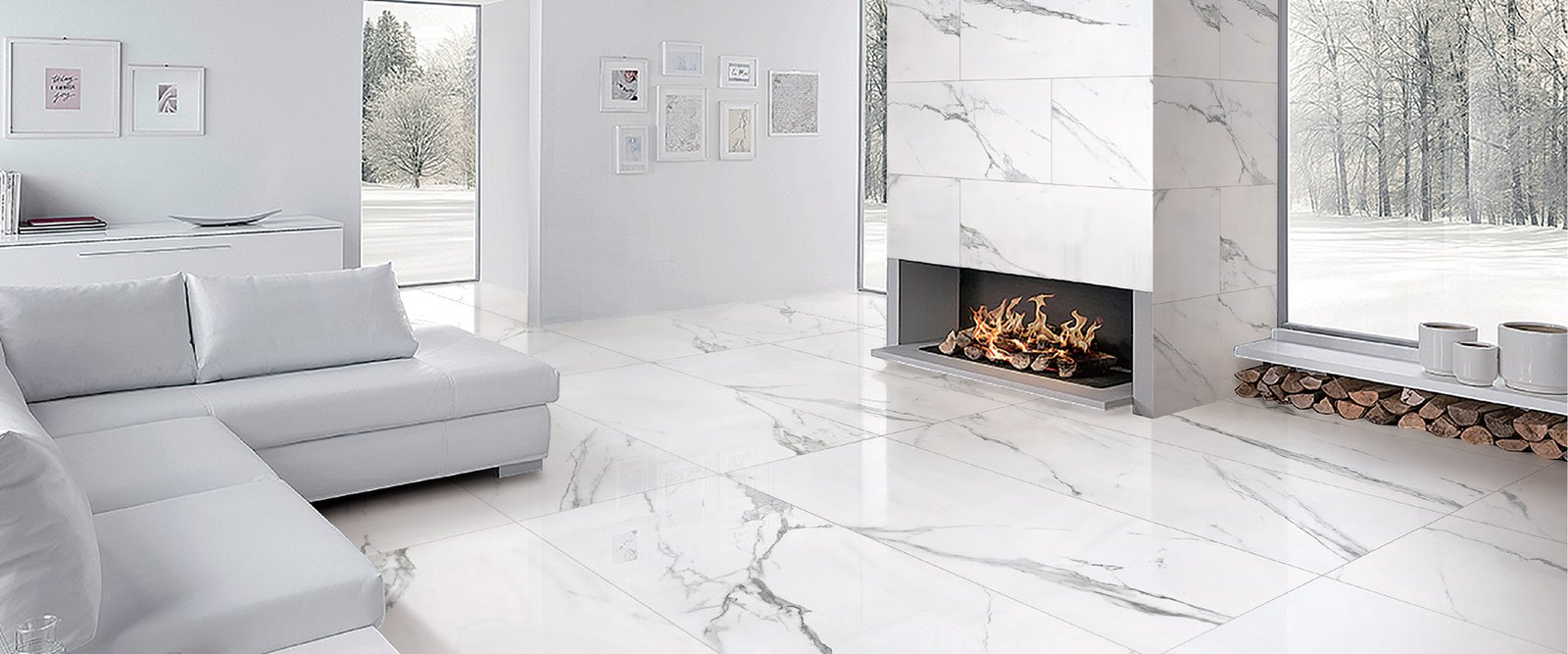
A marble-look porcelain such as Carrara is a good example of getting the veined-stone appearance while keeping the low-maintenance, water-resistant body underneath. Real marble in the same spot would need sealing and could etch from everyday cleaners, so the porcelain version gives you the look without the upkeep. That trade matters in a busy household where nobody wants to baby a floor.
Where ceramic still makes sense
None of this means ceramic is second rate. It has real strengths, and the biggest one is walls. Ceramic is lighter than porcelain, which makes it easier to hang on a vertical surface and easier for an installer to handle overhead. It is also softer to cut, so intricate layouts and trim work go faster.
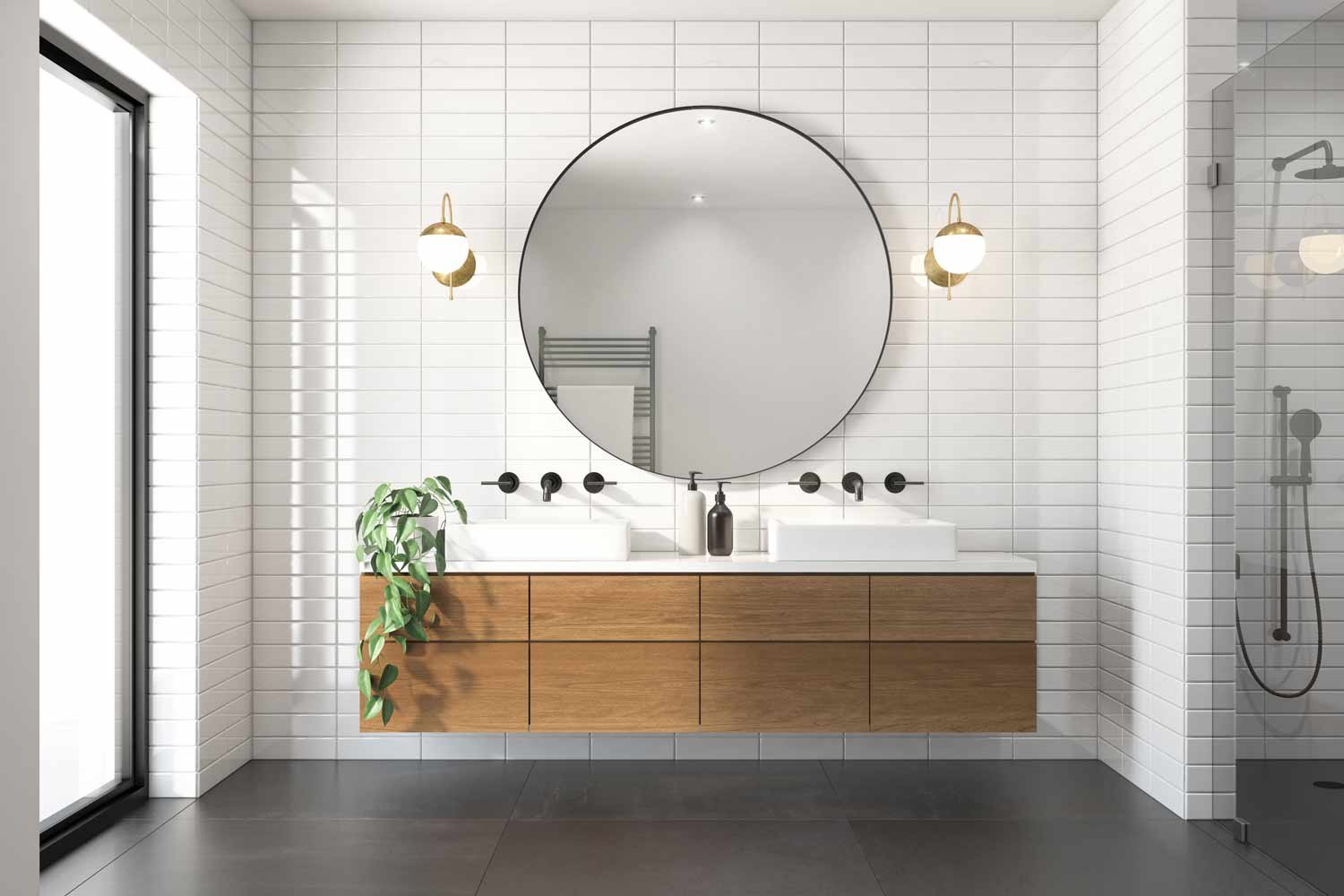
Consider the classic subway wall. A subway wall tile in ceramic is a fitting choice for a kitchen backsplash or a bathroom wall, where the tile never has to bear foot traffic and the lighter body is an advantage. Wood-look options like a larchwood wall tile bring warmth to a feature wall without the weight of a heavier tile. The rule we repeat often: porcelain where you walk, ceramic where you do not.
A simple way to decide
When a customer is stuck between the two, we ask three questions. The answers usually settle it quickly.
- Will the tile get walked on? Floors point strongly toward porcelain for its density and durability.
- Will it get wet or cold? Wet rooms, exterior thresholds, and freeze-thaw exposure all favor porcelain.
- Is it going on a wall in a dry or low-moisture area? A backsplash, a feature wall, or a powder-room accent is a natural home for ceramic.
If your project mixes zones, and most do, there is nothing wrong with using both. A common bathroom setup runs porcelain across the floor for grip and durability, then carries ceramic up the walls where the lighter body and lower cost are welcome. The two read as a single design when the colours and finishes are chosen to work together.
Finish and format still matter
Choosing the right body is only half the job. Finish changes how a tile performs underfoot: a polished surface looks bright but turns slick when wet, while a matte or textured finish gives grip where you need it. Format matters too. Larger tiles calm a small room by reducing grout lines, while smaller mosaics flex over a shower slope and add traction. These are the details that are hard to judge from a phone screen and easy to judge with a sample in your hand under real light.
That is also where local context comes back in. Greater Vancouver homes run a wide range, from character houses in older neighbourhoods to new builds across Richmond and the wider Lower Mainland, and the same tile can read very differently depending on the room's light and the surrounding finishes. Seeing options together, in person, is the surest way to avoid a costly reorder.
The short version
Porcelain is the denser, lower-absorption, harder-wearing option, and it belongs on floors, in wet rooms, and anywhere cold or moisture is a factor. Ceramic is lighter and easier to work with, and it shines on walls and backsplashes in dry areas. Neither is universally better. The right answer depends on where the tile is going and what it has to endure.
If you would like to feel the difference for yourself, bring your measurements and your ideas to our showroom at #3-11240 Bridgeport Rd in Richmond, or call 604-270-4993. You can also reach us through the contact page, and we will help you match the right tile to each part of your project.
Related Reading
More in This Guide
Large Format Tile: Where Oversized Slabs Work Best
The benefits and trade-offs of large format porcelain tile and slabs, and the rooms and walls where minimal grout lines pay off.
12 Marble-Look Porcelain Tile Collections to See in Richmond BC
A tour of the marble-look porcelain tile collections on display at Ace Premium Tile & Stone in Richmond BC, from Carrara and Calacatta looks to onyx and crema tones.
Sintered Stone vs Quartz vs Granite: Choosing a Countertop Surface
How sintered stone compares to quartz and granite on heat, UV, and scratch resistance, and what that means for kitchens and outdoor counters.
Featured in this article
Explore These Collections

Planning a Project?
Visit our Richmond showroom to see and touch these materials, or get in touch for samples, pricing, and expert advice.