
Buying Guides
Large Format Tile: Where Oversized Slabs Work Best
June 27, 2026 · Ace Premium Tile & Stone
Part of our guide: Tile and Stone Materials Explained: Porcelain, Ceramic, Marble and Sintered Stone
Walk into almost any newly renovated condo in Richmond or a modern home in Vancouver, and you will notice the same thing: fewer grout lines. Large format tile has quietly become the surface of choice for people who want a calm, continuous look, and the reason is simple. When a single piece covers more wall or floor, the eye reads the room as one uninterrupted plane instead of a grid. That effect is worth understanding before you commit, because oversized slabs reward some spaces and fight against others.
What counts as large format
There is no single industry line, but in practice we call anything with one side of 24 inches or longer a large format tile. From there it scales up quickly: 24x48, 32x32, and true slabs that run several feet in each direction. Most of what you will see in this size is porcelain, which matters for a few practical reasons. Porcelain is fired dense, absorbs very little water, and resists scratching and frost, so a big porcelain panel behaves predictably whether it is on a kitchen floor or a covered patio wall. You can browse the range in our large format collection to get a feel for the proportions in person.
The case for going big
The headline benefit is grout. Fewer joints mean less visual clutter and, just as important, less grout to clean and maintain over the years. Grout lines are where dirt collects and where a floor starts to look tired first. Cut their number down and the surface stays easier to keep.
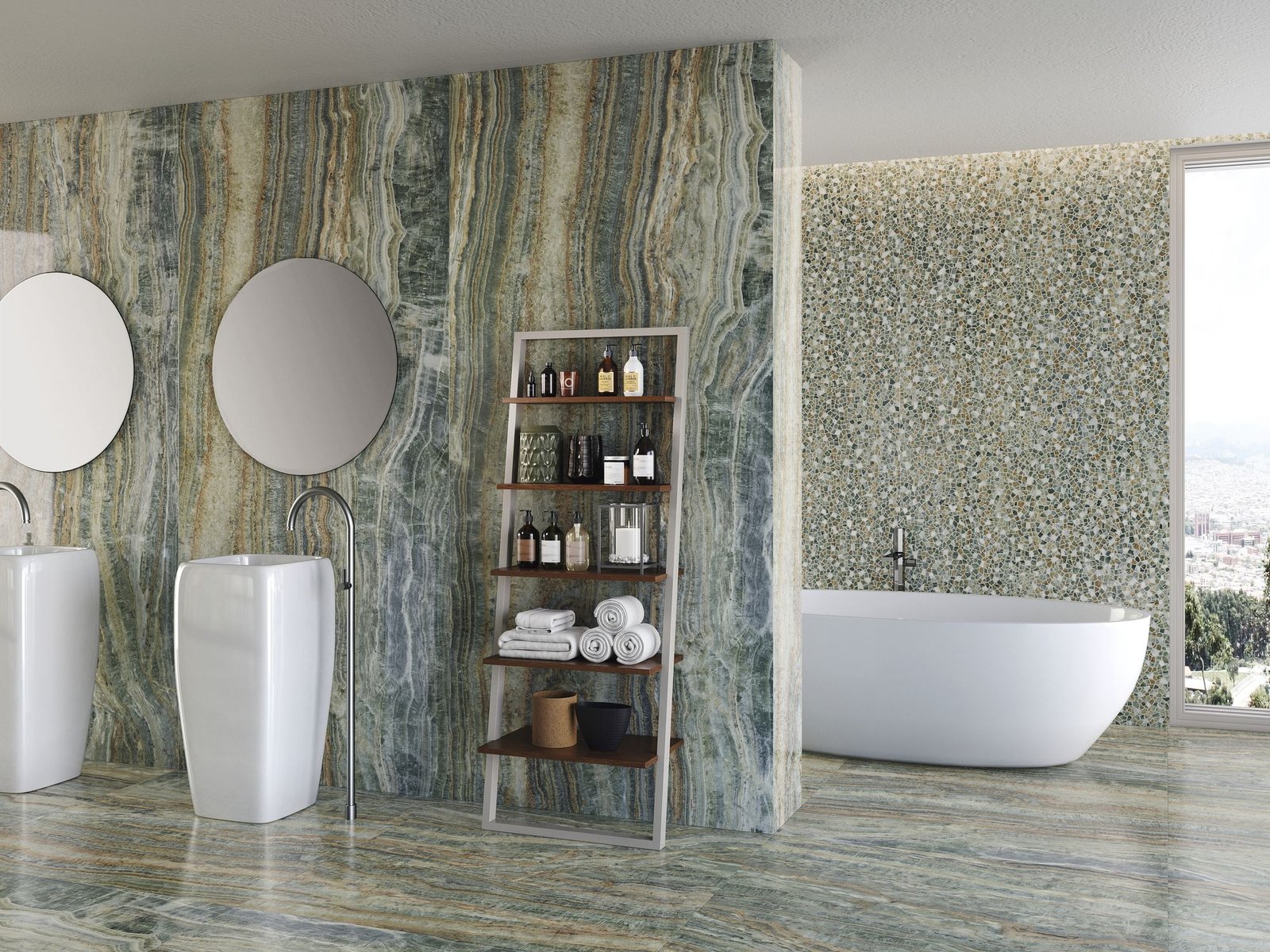
Large format also does something useful in smaller rooms, which runs counter to what people expect. A compact Lower Mainland bathroom or a narrow galley kitchen often feels larger with big tile, not smaller, because the reduced grid stops chopping the space into pieces. The same logic applies to feature walls: a stone-look slab like Eternal or a metallic-toned Titanium can carry an entire fireplace surround or entryway with almost no interruption, giving you the drama of a natural slab without seams every foot.
There is a hygiene angle too. Fewer joints on a shower wall or a kitchen backsplash means fewer places for grime to settle, which is part of why large format shows up so often in modern, low-maintenance designs.
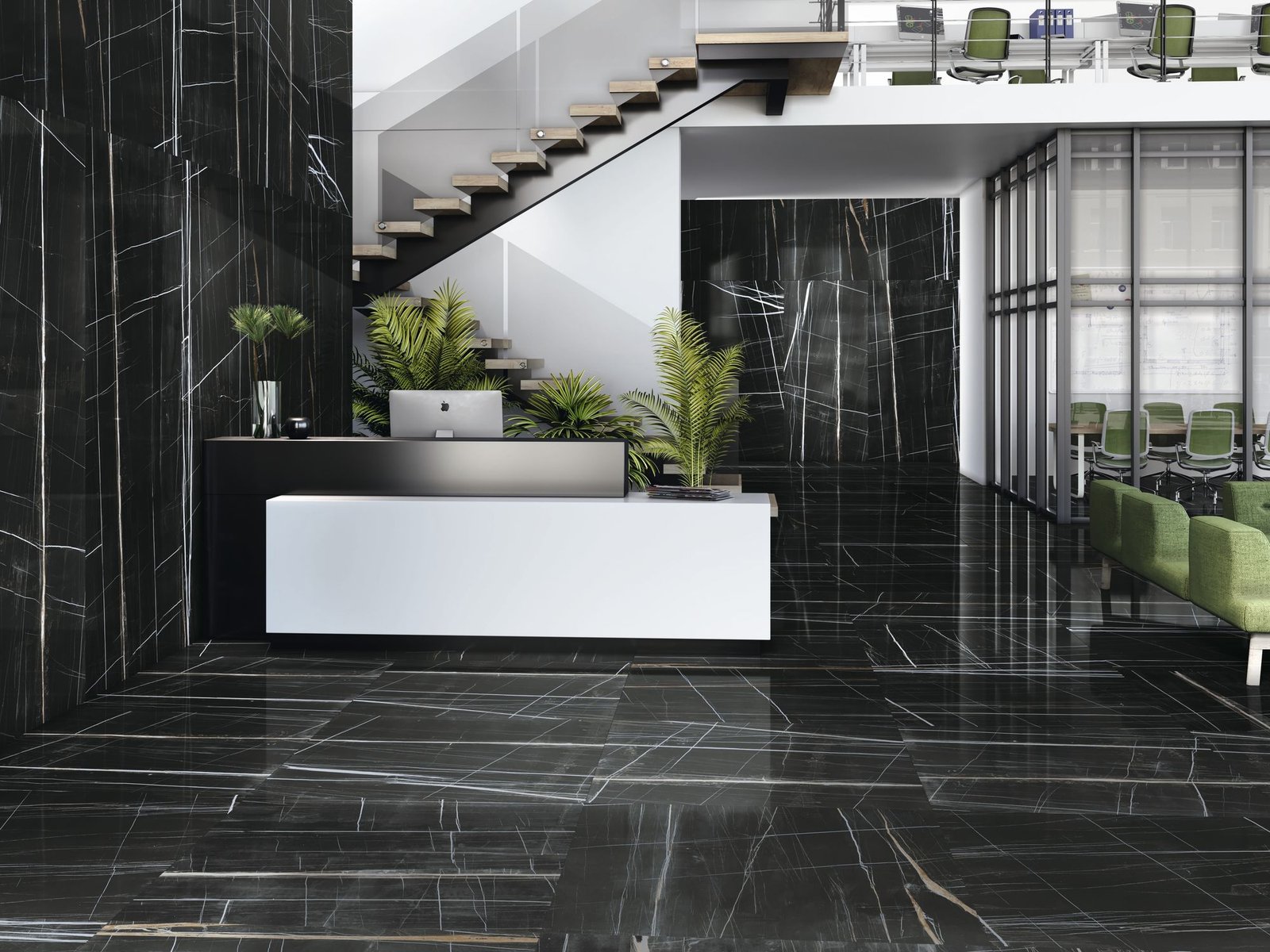
Scale also lets natural veining and movement play out properly. A marble-look or stone-look pattern printed across a large panel can carry a full sweep of veining that would be chopped into fragments on a small tile. On a feature wall, that continuity is the whole point: the material reads as a genuine slab of stone rather than a repeating tile. If you have ever admired a hotel lobby wall that looks carved from one block, large format is usually how it was done.
The trade-offs to plan for
Big tile is not automatically the easy choice, and honest advice means naming the catch. Three things deserve attention:
- Flatness of the substrate. A large panel has no give. If the floor or wall underneath dips or humps, a long tile will telegraph that unevenness or rock. Substrate prep becomes non-negotiable, and that can add labour.
- Handling and cutting. Slabs are heavy and can crack if mishandled, so installation usually calls for two people, the right suction tools, and a saw suited to the size.
- Layout waste. Because each piece is large, an awkward room shape can push up offcuts. Planning the layout carefully keeps waste reasonable.
None of this should scare you off. It just means large format works as a considered choice rather than a default, and it is exactly the kind of thing worth talking through before you buy.
Rooms where it shines
Open-plan living floors are the natural home for large format. A continuous run across a kitchen and living area reads as one generous surface, and the fewer seams suit the clean lines people favour in newer Vancouver builds. Grace, with its softer tone, works well here when you want warmth underfoot without busy pattern.
Bathrooms benefit too, especially walls. Running a large panel floor to ceiling in a shower gives a spa-like, seamless wrap that is genuinely easier to wipe down. On floors, choose a matte or textured finish for grip, since a wet polished surface gets slick.
Commercial-feeling spaces, lobbies, and even feature stair walls all suit the format. And do not overlook the outdoors. In our climate, freeze and thaw cycles are hard on surfaces, and dense porcelain handles that far better than many alternatives, which is why the large format look carries naturally onto covered patios and outdoor kitchens.
Where to think twice
Highly irregular rooms with lots of jogs, niches, and short runs can waste the advantage of large tile, since you end up cutting most pieces down anyway. Very old homes in the Lower Mainland with settled, uneven subfloors may need enough prep that a smaller format becomes the more sensible path. And on a steeply sloped shower floor, small mosaics on mesh still win, because they flex to the drain and give better traction than a rigid large piece ever could.
See the scale before you decide
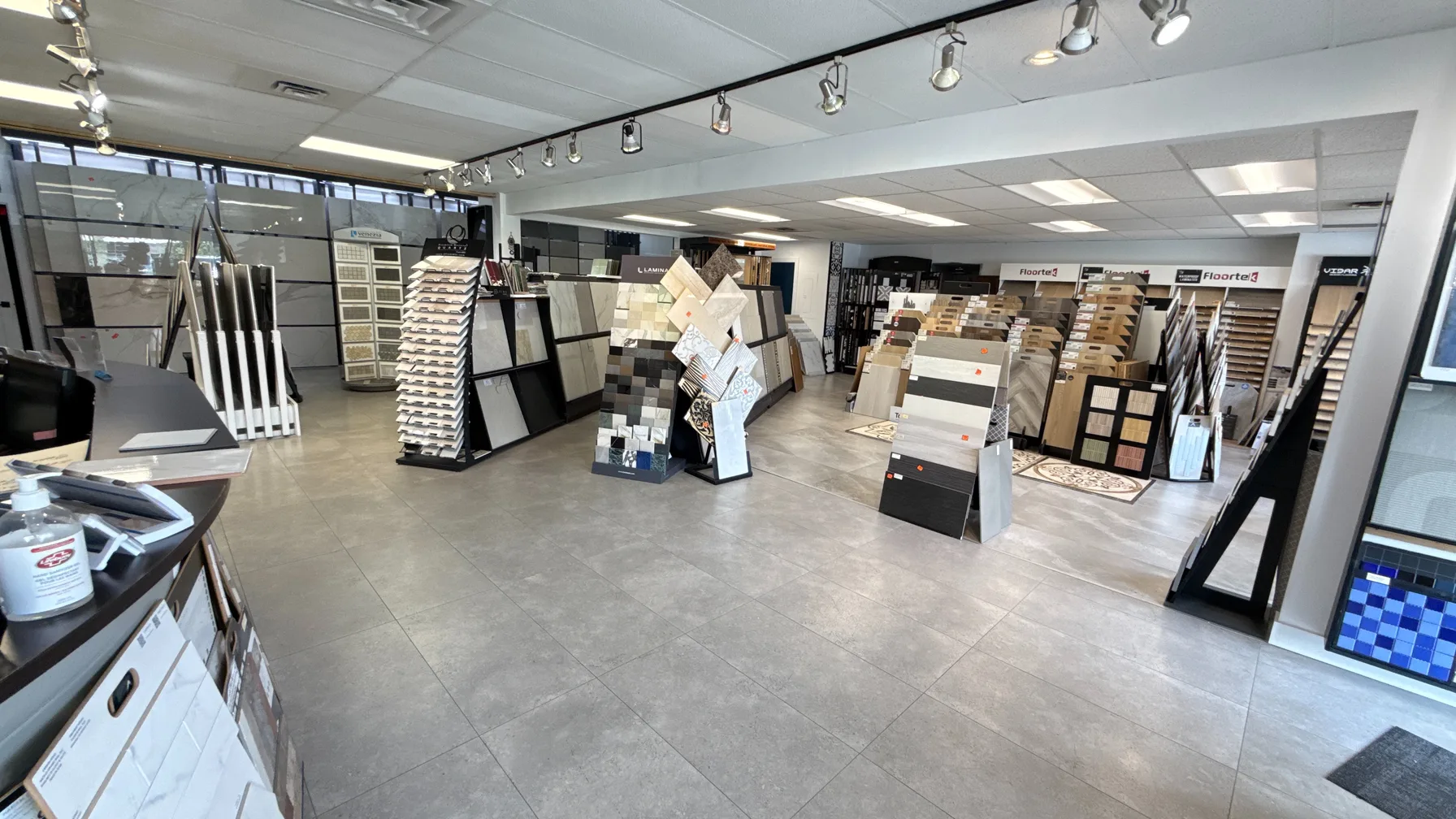
Large format is one of those materials that photographs beautifully but truly makes sense only when you stand next to it and picture it in your own room. The weight, the finish, the way a single slab reads across a wall: those are showroom decisions. Come see the large format range at our showroom at #3-11240 Bridgeport Rd in Richmond, call us at 604-270-4993, or reach out through our contact page, and we will help you figure out where oversized tile earns its place in your project.
Related Reading
More in This Guide
Porcelain vs Ceramic Tile: How to Choose for Your Project
The real differences between porcelain and ceramic tile, water absorption, durability, and where each belongs, for Greater Vancouver homes and projects.
12 Marble-Look Porcelain Tile Collections to See in Richmond BC
A tour of the marble-look porcelain tile collections on display at Ace Premium Tile & Stone in Richmond BC, from Carrara and Calacatta looks to onyx and crema tones.
Sintered Stone vs Quartz vs Granite: Choosing a Countertop Surface
How sintered stone compares to quartz and granite on heat, UV, and scratch resistance, and what that means for kitchens and outdoor counters.
Featured in this article
Explore These Collections

Planning a Project?
Visit our Richmond showroom to see and touch these materials, or get in touch for samples, pricing, and expert advice.