
Buying Guides
Flooring and Outdoor Tile in Greater Vancouver: A Complete Guide
June 24, 2026 · Ace Premium Tile & Stone
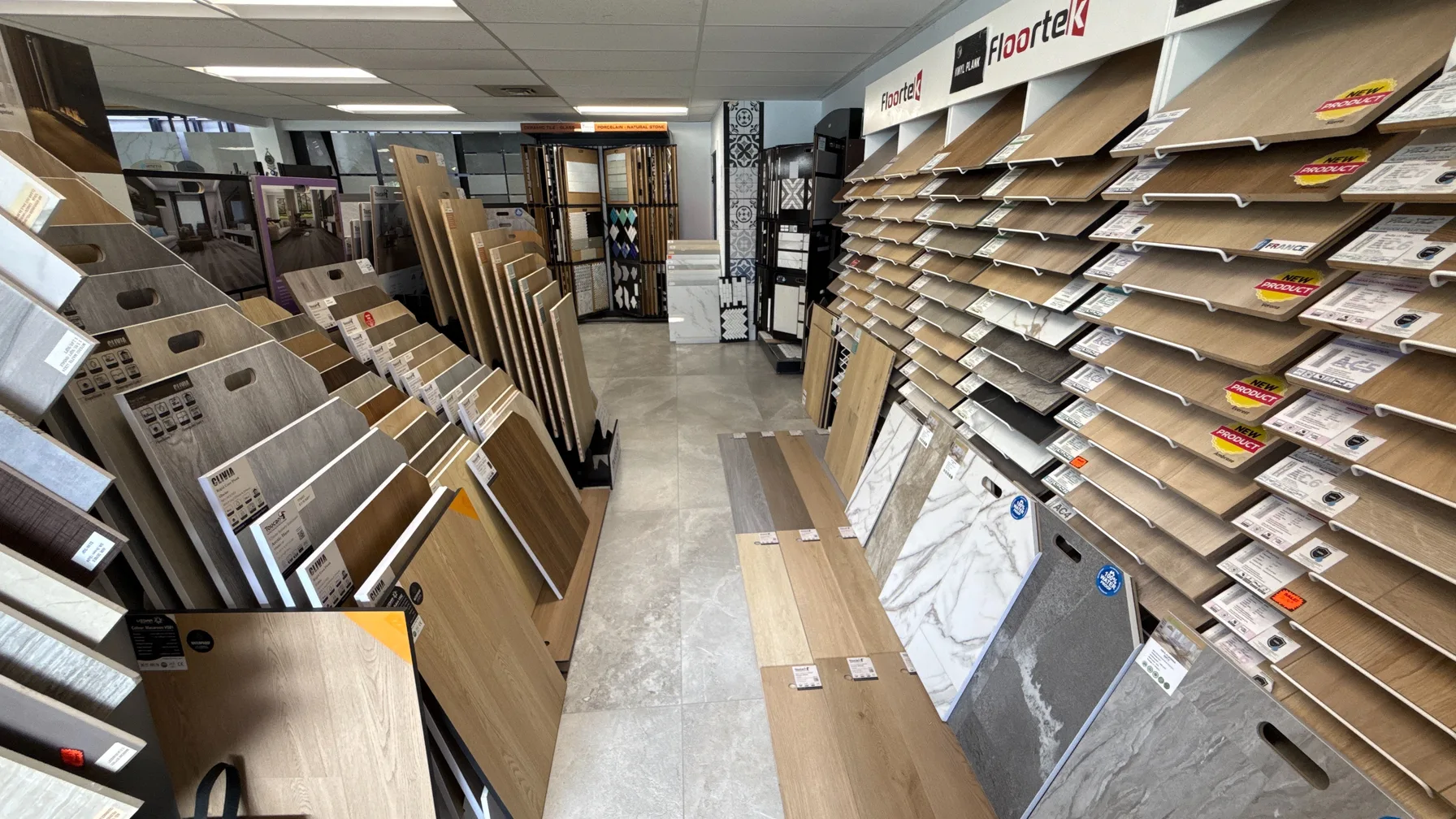
Flooring is the surface you live on, and in Greater Vancouver it also has to cope with a climate that keeps testing it. Wet winters, damp entryways, repeated freeze and thaw cycles, and long stretches of grey light all shape what works underfoot and what fails early. The same is true outdoors, where a patio or pool deck has to survive rain, frost, and the occasional stretch of strong summer sun. This guide pulls the whole subject together in one place, so you can see how the pieces fit before you narrow down a choice. Along the way we point you to our deeper articles on each part of the decision, and to the collections you can come see in person at our Richmond showroom.
Start with how the space is used
Before you look at a single sample, it helps to sort your project into zones. A busy entry that catches rain and grit off Lower Mainland sidewalks asks for something different than a bedroom that stays dry and quiet. A covered patio that meets outdoor air needs a material that shrugs off frost. A basement that sits below grade wants a floor that tolerates moisture from underneath.
Here is the short version of what this guide covers, so you know where you are headed:
- Outdoor porcelain pavers for patios, rooftops, and pool decks that face rain and freeze-thaw
- Indoor flooring options, comparing wood-look tile, laminate, and luxury vinyl
- How the region's climate should steer each choice
- The collections you can walk on and handle at our showroom
Once the zones are clear, the material choices tend to sort themselves out. Most homes end up using more than one product, and that is completely normal.
Outdoor tile that handles the Lower Mainland climate
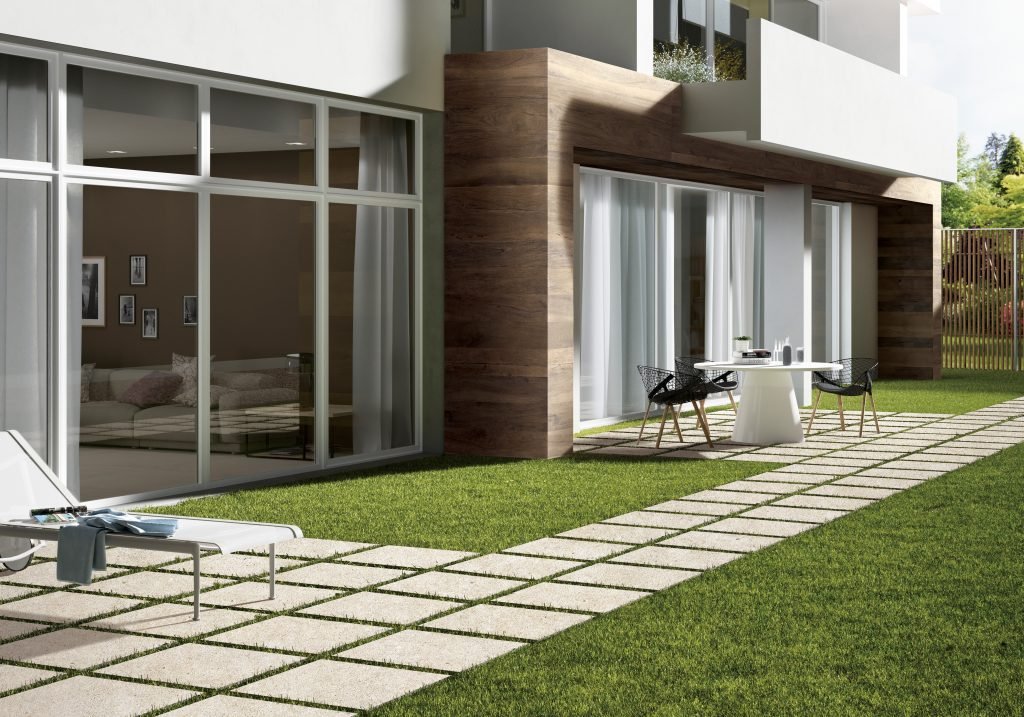
Outdoor surfaces take the hardest beating of anything on a property. Rain sits on them, frost works into them overnight, and foot traffic grinds across them for years. This is where dense porcelain earns its place. A 2cm porcelain paver absorbs very little water, which means water cannot soak in, freeze, expand, and crack the tile the way it can with more absorbent materials. That frost resistance matters a great deal in a region that cycles above and below freezing many times over a single winter rather than staying frozen straight through.
Thick porcelain pavers are also flexible in how they get installed. They can sit on adjustable pedestals over a rooftop or balcony, on a bed of gravel or sand for a garden path, or set in mortar for a permanent patio. That range lets the same tile work across very different outdoor projects. A rooftop terrace on a Richmond condo, for instance, often calls for the pedestal method, which keeps the pavers level over a sloped membrane and lets rainwater drain freely underneath. A ground-level garden patio might sit on compacted gravel instead, and a formal walkway that has to stay put for decades usually gets set in mortar over a proper base. The tile stays the same across all three; only the method under it changes. For the full picture, including how each installation method works and where it suits a Vancouver property, read our guide to outdoor porcelain pavers for Vancouver patios, rooftops, and pool decks.
When you are ready to look at specific products, our outdoor tile collections gather the pavers and formats built for exterior use. A line like the Project outdoor collection is a good starting point for a patio or deck, and the Stoneland range shows how a stone-look surface reads outdoors. Seeing these in daylight, next to the tones of your siding and landscaping, tells you far more than a screen ever will.
Indoor flooring: comparing your main options
Indoors, the conversation usually comes down to three families that all deliver a wood or stone look at different price points and with different tradeoffs. Each one has a place, and the right pick depends on the room, the moisture, and how the floor will be treated day to day.
Wood-look porcelain tile gives you the appearance of plank flooring in a body that absorbs very little water and needs no sealing. Because porcelain is frost and scratch resistant as well, it can carry a wood look right up to an exterior threshold without trouble. That makes it a sensible choice for entries, kitchens, and bathrooms where real wood would swell or stain. Laminate offers a warm, budget-friendly plank with a printed surface over a dense core, and it installs quickly as a floating floor over a suitable subfloor. Luxury vinyl brings a resilient, water-tolerant plank that feels softer and a little warmer underfoot, and it holds up well in basements and other damp-prone areas where a rigid tile might feel cold.
The way each material handles moisture is the deciding factor in many Lower Mainland homes. Porcelain simply does not take on water, so it is the safest pick anywhere spills and tracked-in rain are constant. Luxury vinyl tolerates moisture well and forgives the occasional wet floor. Laminate is the most sensitive of the three to standing water, which is why it belongs in dry rooms rather than bathrooms or entries. Matching the material to the moisture in each room prevents the kind of early failure that leads to tearing a floor out and starting over.
Because the differences are easy to blur, we wrote a full comparison. Our guide to wood-look tile vs laminate vs luxury vinyl flooring walks through where each one belongs, how they handle moisture, and how they age. It is the piece to read when you are stuck between two of them.
If you want to explore each material on its own, our flooring overview is the hub for the whole category, and the laminate flooring and luxury vinyl flooring learning pages go deeper on those two options specifically. Between them you can get a feel for what suits a character home in an older neighbourhood versus a new build across Richmond or the wider Lower Mainland.
Let the climate steer the details
The Lower Mainland climate should sit in the back of your mind through every choice, not just the outdoor ones. Damp gets tracked in through the front door for months at a time, so an entry floor wants a material that resists moisture and a finish that grips when wet. A polished surface looks bright but turns slick underfoot once water hits it, while a matte or textured finish holds traction where you need it. That distinction is easy to overlook on a showroom pedestal and obvious the first rainy week after installation.
Freeze and thaw is the other quiet factor. Any surface that meets outdoor air, including a covered porch, an exterior threshold, or a set of steps, benefits from a dense, low-absorption body that gives trapped water nowhere to expand. This is the same reasoning that makes porcelain the default for outdoor pavers, and it applies just as much to the transition zones where inside meets outside.
Light is worth a thought too. Grey winter days flatten colour, so a floor that looks warm under showroom lighting can read cooler and darker at home. Bringing a sample back to the actual room, and looking at it morning and evening, saves you from a costly reorder.
How the pieces fit together
Most Greater Vancouver projects mix several of these products, and that is the point of thinking in zones. A common setup runs wood-look porcelain or luxury vinyl through the main living areas for durability against tracked-in wet, carries the same look outdoors in a frost-resistant paver so the patio feels connected to the interior, and uses laminate in dry bedrooms where cost and comfort matter more than moisture resistance. Chosen with care, the tones and textures read as one considered design rather than a patchwork.
The two detailed guides linked above go deep on the specifics, so use this page as your map. Start with outdoor porcelain pavers if your project is a patio, rooftop, or pool deck, and start with the wood-look tile, laminate, and vinyl comparison if the work is indoors. Either way, you will arrive at the showroom knowing which questions to ask.
See it and feel it in person
Flooring and outdoor tile are hard to judge from a photograph and easy to judge with a plank in your hand and a paver underfoot. Bring your measurements, a few photos of the space, and any samples of your existing finishes to our showroom at #3-11240 Bridgeport Rd in Richmond, and we will help you match the right material to each zone of your home. Walk-ins are welcome. You can also call us at 604-270-4993 or reach out through the contact page, and we will talk through your project and prepare a quote.
In This Guide
Read Next
Outdoor Porcelain Pavers for Vancouver Patios, Rooftops and Pool Decks
Why 2cm porcelain pavers handle Lower Mainland freeze-thaw better than concrete, plus install options for patios, rooftops, and pool decks.
Wood-Look Tile vs Laminate vs Vinyl Flooring: Which Is Right?
A clear comparison of wood-look porcelain tile, laminate, and luxury vinyl plank for durability, moisture, and where each fits.
Outdoor Porcelain Paver Collections for Vancouver Patios and Rooftops
Every 2cm outdoor porcelain paver collection at Ace Premium Tile & Stone in Richmond BC: Project, Stoneland, Timberwood, Blendstone and more, plus pedestal systems.
Featured in this article
Explore These Collections


Planning a Project?
Visit our Richmond showroom to see and touch these materials, or get in touch for samples, pricing, and expert advice.