
Buying Guides
Marble-Look Porcelain: The Look of Marble Without the Upkeep
June 27, 2026 · Ace Premium Tile & Stone
Part of our guide: How to Choose Bathroom Tile That Lasts in a Wet Vancouver Climate
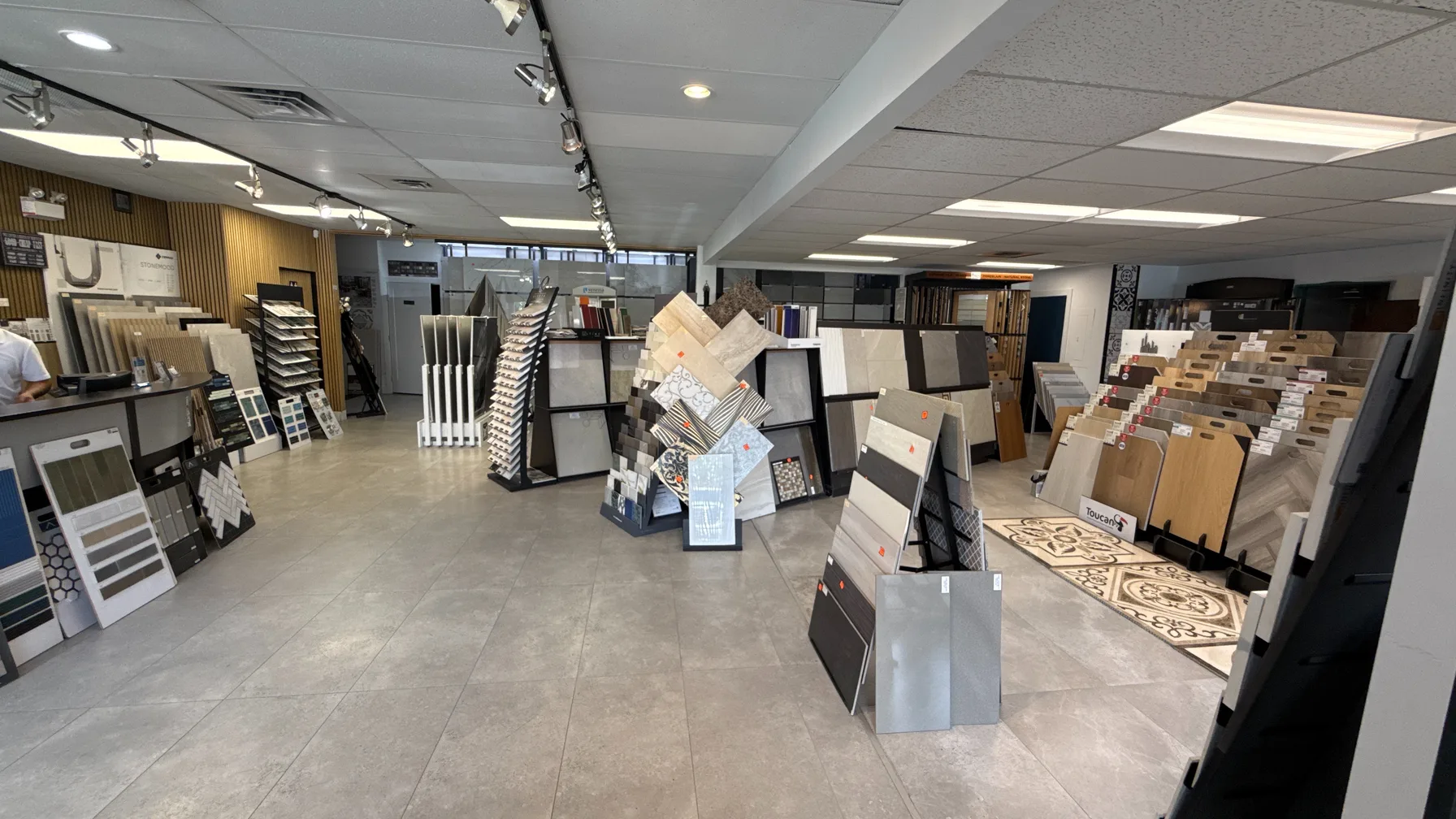
There is a reason marble has anchored kitchens and bathrooms for centuries: the soft grey veining of Carrara, the bolder movement of Calacatta, the quiet luminance that seems to come from inside the stone. What stops many Greater Vancouver homeowners from committing is not the look. It is the maintenance. Real marble is a porous natural stone, which means it needs sealing, and it etches when it meets everyday acids like lemon, wine, or a splash of cleaning product. Marble-look porcelain solves that problem. It carries the same veined-stone appearance across a surface that behaves like porcelain, not like stone.
What "marble look" actually means
Marble-look porcelain is a porcelain tile printed and glazed to mimic the coloring and veining of natural marble. Because it is porcelain, it is fired dense and absorbs almost no water. It does not need periodic sealing, and it does not etch when acids touch it. That is the whole appeal: you get the marble aesthetic without signing up for the upkeep that comes with the real slab.
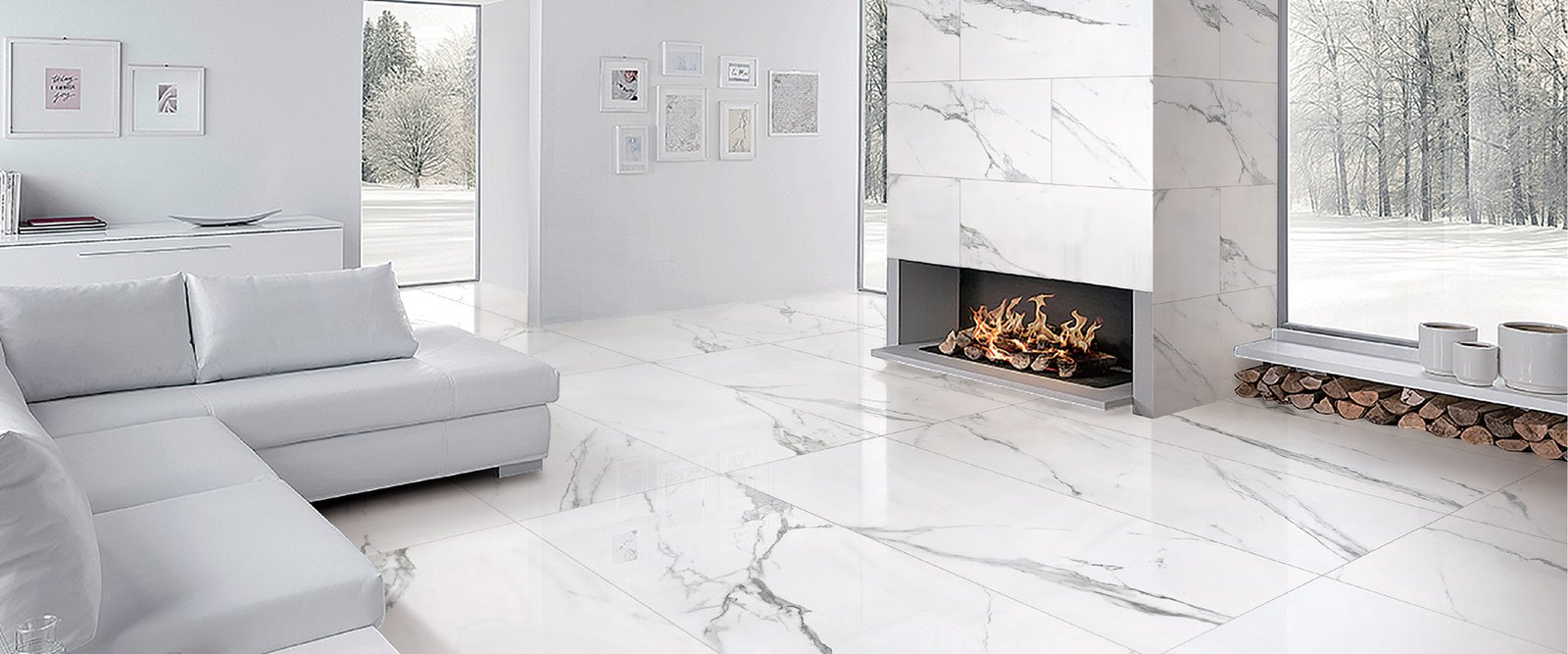
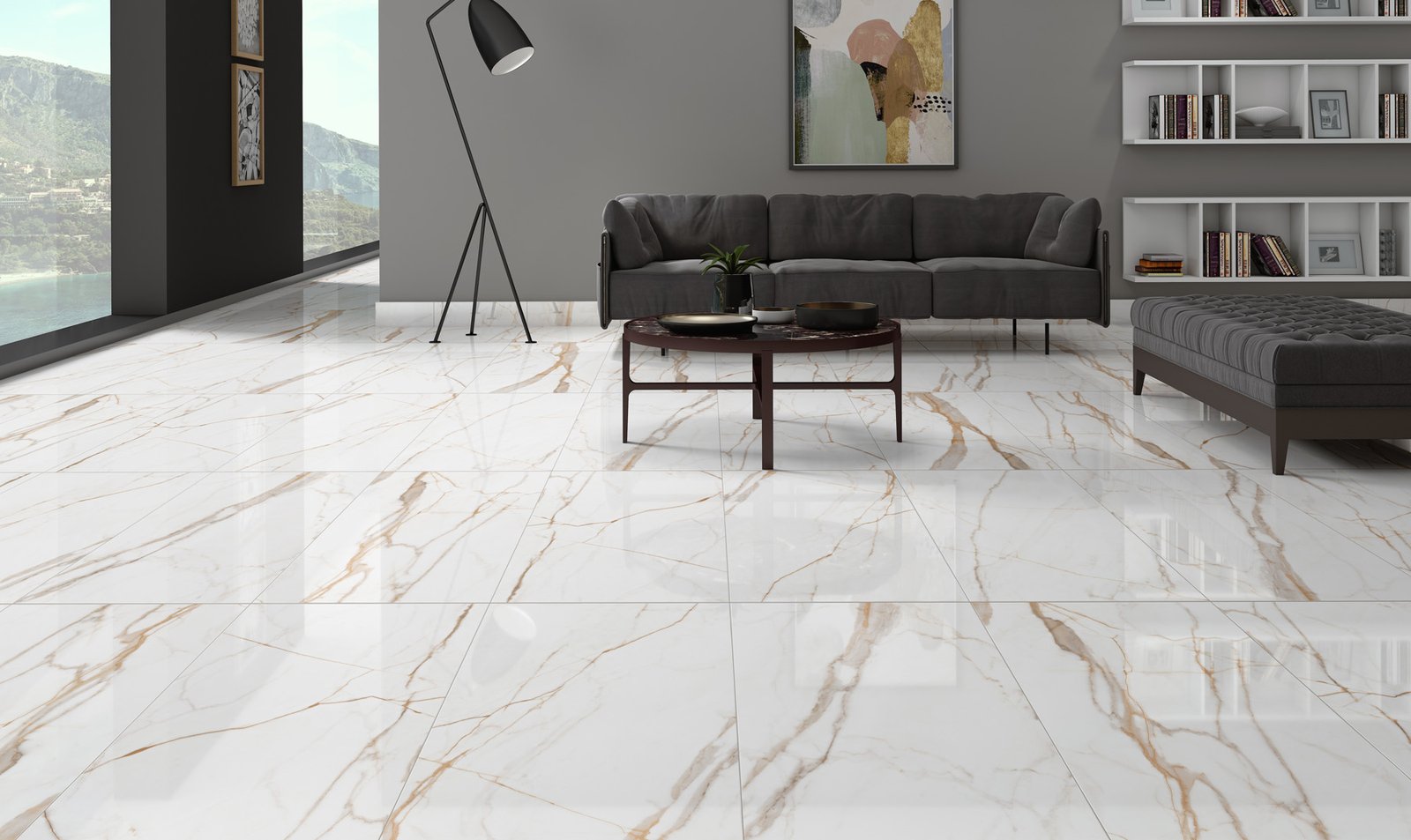
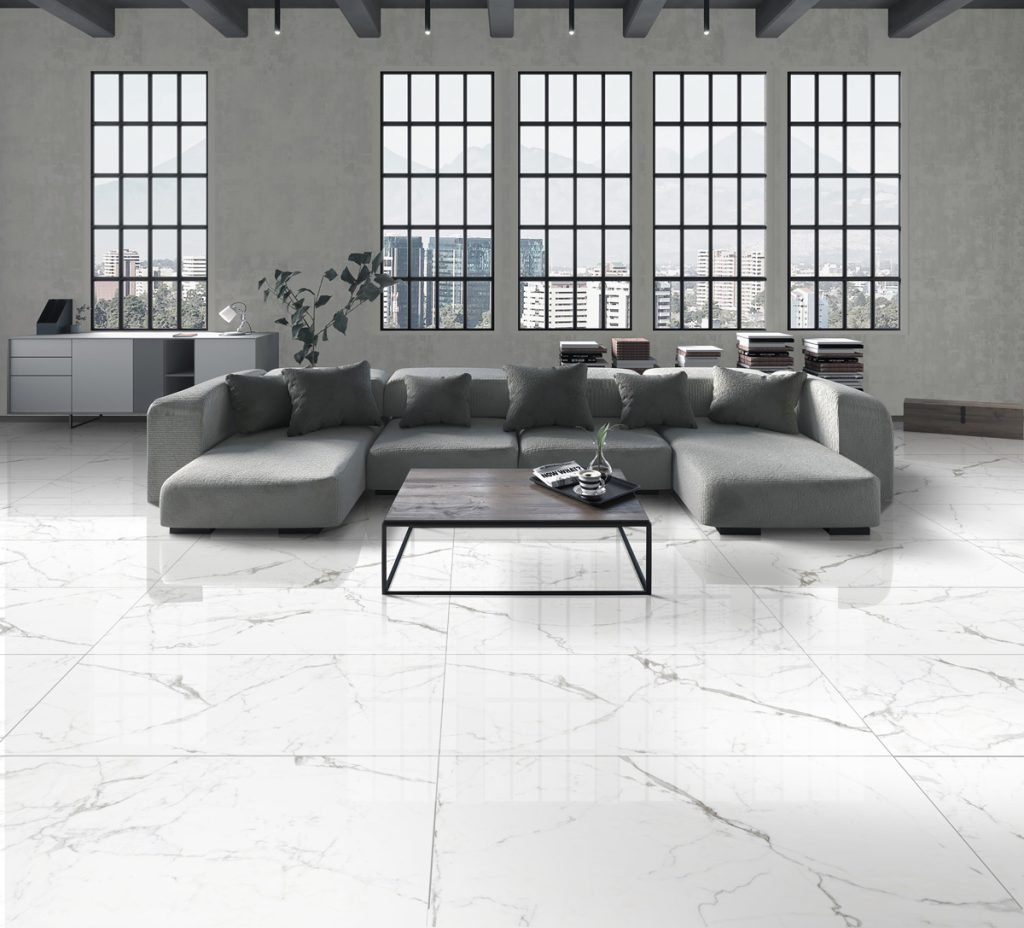
The visual range has grown wide. You can find faithful takes on the classics, from the delicate grey veining of a Carrara pattern to the dramatic gold-threaded look of a Calacatta such as Calacatta Oro, or the crisp bright-white ground of a Statuario style. Held next to a genuine marble tile in the showroom, a good marble-look porcelain reads convincingly. The difference shows up over years of use, not on day one.
Where porcelain wins over stone
Natural marble is beautiful, but its behavior is worth understanding before you install it in a working room. Marble is porous, so it needs to be sealed to resist staining, and even a sealed surface can etch. Etching is a dull mark left where an acid has reacted with the calcium in the stone. It is not a stain you can scrub away; it is a change in the surface itself.
Porcelain sidesteps all of that:
- Very low water absorption, so moisture is not an issue in bathrooms, kitchens, or laundry rooms.
- No sealing required, ever, unlike natural stone.
- Frost resistant and scratch resistant, which matters in our climate.
- No etching from household acids or cleaners.
That last point is the quiet reason marble-look porcelain has become the default for kitchen floors and bathroom renovations. You can cook, clean, and live normally without babying the surface.
The Vancouver climate angle
The Lower Mainland gives tile a specific workout. Winters are long and wet, homes track in moisture for months, and any tile near an entry, a mudroom, or an unheated space has to cope with damp and cold. Porcelain's very low water absorption means it does not soak up that moisture, and its frost resistance means it holds up where temperatures dip near freezing. Real marble, by contrast, wants to stay warm, dry, and sealed to look its best.
There is a second regional fit. A lot of Richmond and Greater Vancouver homes lean toward bright, open interiors that make the most of grey-sky daylight. A light Carrara or Statuario look bounces what light there is around a room, which is part of why marble-look porcelain shows up so often in local renovations. You get the airy, luminous feel without the maintenance calendar.
Where it works around the home
Marble-look porcelain is versatile, but a few pairings come up again and again.
Floors are the strongest case. Because porcelain shrugs off water, scratches, and acids, a marble-look floor works in kitchens, entries, and full bathrooms where a real marble floor would be a constant worry. On a bathroom or shower floor, ask for a matte or textured finish; polished marble-look porcelain is stunning on a wall but gets slick underfoot when wet.
Walls are where you can be bolder. A polished Calacatta-look feature wall behind a vanity or a fireplace reads like a slab of stone, and since it is on a wall it never has to fight moisture the way a floor does. A common move that works well: run a matte marble-look on the floor for grip, then carry a polished version of the same pattern up the walls so the room reads as one continuous stone.
Kitchens benefit twice over. A marble-look porcelain backsplash pairs cleanly with counters and cabinets, and because it does not etch, it laughs off the citrus and vinegar that would mark a real marble backsplash near a cooktop.
Choosing the right pattern
Veining is a matter of taste and scale. A subtle grey Carrara pattern suits smaller rooms and calmer schemes, where busy veining would feel cluttered. A bolder Calacatta with gold or charcoal movement earns its place as a feature: a large-format wall, a shower surround, an island face. Statuario styles sit in between, bright and clean with defined but not overwhelming veins. Larger rooms can carry more dramatic patterns; compact spaces usually read better with restraint.
Finish is the other lever. Polished amplifies the depth of the veining and suits walls and low-traffic areas. Matte and textured finishes are the safer call anywhere feet and water meet. In many bathrooms the smart split is matte below, polished above.
See the veining in person
Marble-look porcelain is one of those materials that photographs well but reveals itself in person: how the veining catches the light, how a floor pattern reads against a wall pattern, how the finish feels underfoot. That is a showroom decision. Come see the marble-look ranges at our Richmond showroom at #3-11240 Bridgeport Rd, call us at 604-270-4993, or reach out through our contact page, and our team will help you match a pattern and finish to your space.
Related Reading
More in This Guide
Why Mosaic Tile Is the Right Choice for Shower Floors
The practical reasons mosaic sheets suit shower floors, slope to the drain and slip resistance, plus how to pair them with wall tile.
Mosaic Tile Collections for Showers, Niches and Backsplashes
The mosaic tile collections on display at Ace Premium Tile & Stone in Richmond BC, from Carrara Mosaic and Metro Mosaic to marble, stone and cement looks.
Heated Floors Under Tile: What Vancouver Homeowners Should Know
How in-floor heating pairs with porcelain and stone tile, why tile is an ideal conductor, and what to plan for in a Lower Mainland renovation.
Featured in this article
Explore These Collections
Planning a Project?
Visit our Richmond showroom to see and touch these materials, or get in touch for samples, pricing, and expert advice.